
 Image 1 of 2
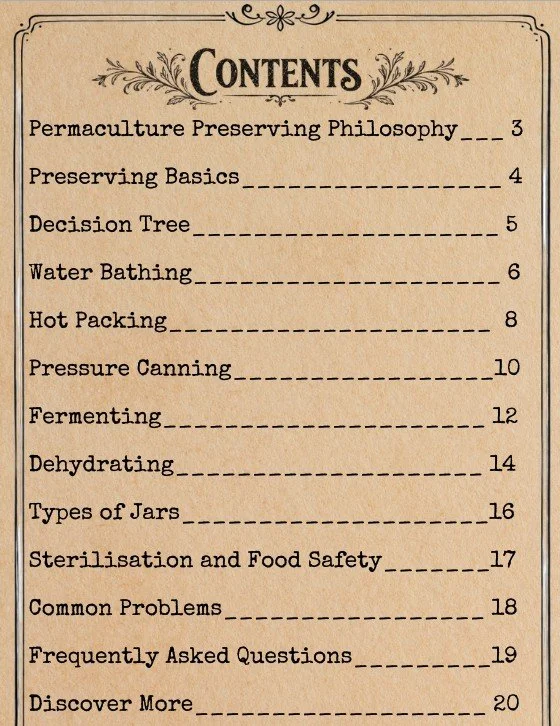 Image 2 of 2
There is something deeply satisfying about opening your pantry to shelves lined with food you have grown, gathered, and preserved yourself. This book is your practical guide to making that vision a reality.
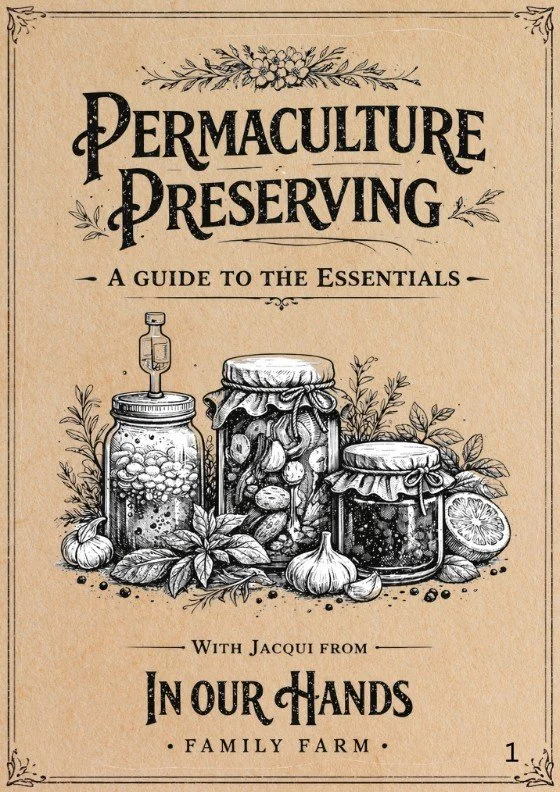
Whether you're just beginning your preserving journey or looking to strengthen your skills, The Complete Guide to Home Preserving provides a clear, confidence-building introduction to the cornerstone preservation methods: water bath preserving, hot packing, pressure canning, fermenting, and dehydrating. Rather than overwhelming you with recipes, this guide focuses on the why behind each technique, helping you understand the science, safety, and philosophy that make home preserving both rewarding and reliable.
Inside you'll discover:
The Permaculture philosophy of preserving and reducing food waste.
Food safety fundamentals, sterilisation, and avoiding cross-contamination.
The differences between preserving methods and when to use each one.
A guide to preserving jars and choosing the right system.
Common preserving mistakes and how to avoid them.
Frequently asked questions answered simply and clearly.
Designed for use at my Preserving Workshop, the booklet has plenty of space for notes and handwritten tips - which will be useful for you as you progress through your homesteading journey
Written from a small-scale, whole-food, Permaculture-inspired perspective, this book encourages you to work with the seasons, preserve local abundance, and build a resilient pantry filled with nourishing food. It's equally at home beside a beginner's first batch of strawberry jam or an experienced preserver's pressure canner.
If you've ever wanted to waste less, eat better, save money, and enjoy the quiet satisfaction of filling your shelves with food made by your own hands, this is the perfect place to begin!
You will recieve two downloads, one for screen use, which is stylised to be on brown paper, and fitting with my brand theme. The other will be black text and images on a white background, so that if you want to print it at home (on whatever paper you like) it will use less ink and be easier to read.
There is something deeply satisfying about opening your pantry to shelves lined with food you have grown, gathered, and preserved yourself. This book is your practical guide to making that vision a reality.
Whether you're just beginning your preserving journey or looking to strengthen your skills, The Complete Guide to Home Preserving provides a clear, confidence-building introduction to the cornerstone preservation methods: water bath preserving, hot packing, pressure canning, fermenting, and dehydrating. Rather than overwhelming you with recipes, this guide focuses on the why behind each technique, helping you understand the science, safety, and philosophy that make home preserving both rewarding and reliable.
Inside you'll discover:
The Permaculture philosophy of preserving and reducing food waste.
Food safety fundamentals, sterilisation, and avoiding cross-contamination.
The differences between preserving methods and when to use each one.
A guide to preserving jars and choosing the right system.
Common preserving mistakes and how to avoid them.
Frequently asked questions answered simply and clearly.
Designed for use at my Preserving Workshop, the booklet has plenty of space for notes and handwritten tips - which will be useful for you as you progress through your homesteading journey
Written from a small-scale, whole-food, Permaculture-inspired perspective, this book encourages you to work with the seasons, preserve local abundance, and build a resilient pantry filled with nourishing food. It's equally at home beside a beginner's first batch of strawberry jam or an experienced preserver's pressure canner.
If you've ever wanted to waste less, eat better, save money, and enjoy the quiet satisfaction of filling your shelves with food made by your own hands, this is the perfect place to begin!
You will recieve two downloads, one for screen use, which is stylised to be on brown paper, and fitting with my brand theme. The other will be black text and images on a white background, so that if you want to print it at home (on whatever paper you like) it will use less ink and be easier to read.